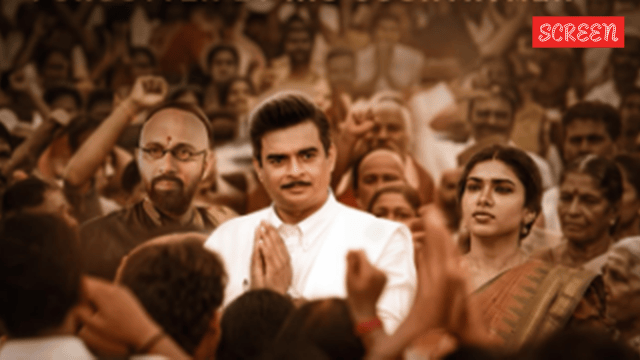
‘GDN’ is a movie about the legendary Indian inventor and industrialist, Gopalaswapmy Doraiswamy Naidu, widely known as the Edison of India. The film narrates GDN’s journey from that of a humble hotel waitor in Coimbatore, to building India’s first electric motor, to running the successful United Motor Services, and pioneering many other successful ventures.
The story of GDN is one of vision, ambition, and innovation coming together. It offers viewers a slice of forgotten Indian history, one that always deserved to be told but never got the chance. While it can be argued that the GDN museum in Comibatore does pay tribute to the man’s memory, nothing communicates the scale of his contribution quite like a commercial potboiler that brings his life to the screen.
What comes through strongly in the movie is GDN’s never-say-die spirit in the face of adversity. Whether it is saving money for a motorbike while working as a waitor, establishing the United Motor Services with barely any resouces, or beating reputed companies to bagging the BMW contract, GDN’s grit is on full display.
Madhavan, who plays GDN, does full justice to his role. Without fumbling or flinching, he portrays the many shades of the man, both at the professional and personal level. Through Madhavan, we see how GDN contributed not only to science and technology but also to those around him. If his BMW dream had materialised, Tamil Nadu would have witnessed an economic transformation.
But when you reach the top, you either stay there or come crashing down. With GDN, it was the latter. Yet, as Madhavan shows with impeccable conviction, a determined and gritty man can never be defeated. Failures are but stepping stones to more success, and that true success comes to those who refuse to give up.
GDN’s rise coincided with that of the nationalist movement. While the Mahatma and other freedom fighters fought the British politically, GDN fought his through industrial vision and enterprise. He may have ultimately lost to the machinery of British rule, but he never surrendered his dignity or stature.
And that, perhaps, is the film’s most enduring meesage: success is not always about winning the battle. Sometimes, it is about refusing to let defeat diminish who you are.