‘Dhadak 2’ Review: A Bold, Unflinching Look at Caste 

Dhadak 2 is Shazia Iqbal’s Hindi adaptation of Mari Selvaraj’s Tamil film ‘Pariyerum Perumal’. It portrays an inter-caste couple’s fight against caste prejudice. 

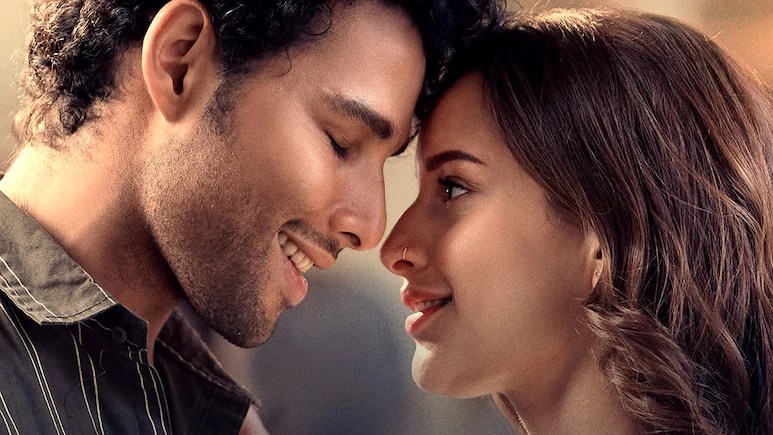
Neelesh (Siddhant Chaturvedi), a Dalit student of law, has a simple and straightforward goal: to study hard, become a lawyer, and lift his family out of poverty. He avoids political activism, lest it derail his long term plans. He finds an empathetic friend in Vidhi (Tripti Dimri), who helps him understand the subject. And, like what happenes in most college friendships, theirs deepens into love.

Neelesh’s subservience and timidity get him nowhere: he is constantly reminded of his place in the caste hierarchy, whether in college or at social gatherings. Neither can he claim his right as a student, nor can he escape casteist taunts. 

His struggle is reminiscent of real-life Dalit students who paid the price for speaking out. The case of Senthil, the Dalit student in the University of Hyderabad who took his own life, comes to mind instantly. And when Shekhar (Priyank Tiwari), Neelesh’s contemporary in college and a fellow Dalit, resorts to the extreme step after being suspended for protesting, one cannot miss the resemblance with Rohit Vemula.

When his face is disfigured by upper caste students in college, the lion in Neelesh awakens. Siddhanth Chaturvedi plays Neelesh’s transformation into a confident and assertive individual, who will not take injustice lying down, convincingly.

Like Siddhant Chaturvedi, Tripti Dimri does full justice to her role. She is not the hero’s usual sidekick and carves out an identity and place of her own. Bold and outspoken, she doesn’t hesitate to ask uncomfortable questions, even if that means challenging her family’s honour. 

Full marks to Shazia Iqbal for boldly engaging with a sensitive theme like caste. She highlights the humiliation Dalit students face in our universities, capturing the stigma in all its rawness. She also addresses the problematic issue of upper caste family honour with the same brutal honesty.

Dhadak 2 is powerful in its treatment of caste. The crisp narrative, sharp dialogues, and engaging story enhance its appeal. It is a must-watch that doesn’t just entertain but compels reflection. The quote at the beginning of the movie sums it up best:

“When injustice becomes law, resistance becomes duty”
Featured

Why I liked Jaane Jaan

Set in the hilly tracts of Kalimpong, ‘Jaane Jaan’ is a movie about Maya D’Souza (Kareena Kapoor Khan), a single mother. When she is accused of murder, she finds unanticipated help from her neighbour, the socially inept but gifted Mathematics teacher Naren Vyas (Jaideep Ahlawat).S

Kareena Kapoor Khan, a seasoned actor, delivers a brilliant performance in a new role. She deftly plays Maya, the cafe owner struggling to make ends meet. While we are used to seeing her exude oomph, in Jaane Jaan, she manages to impress in a middle-aged avatar. Her grace wins her many admirers, most notably Naren. As a result, Naren visits Maya’s cafe often, more for her and less for the egg-fried rice.

Jaideep Ahlawat is terrific as the steely Naren Vyas. Lonely and depressed, he masks his unhappiness with dignity. He cannot articulate his fondness for Maya, whom he loves most after mathematics.

Vijay Varma shines as Inspector Karan Anand, the Mumbai police officer tasked with finding corrupt cop Ajit Mhatre’s killer. He is sharp and trained to look beyond the obvious. However, he is no match for the genius of Naren.  

Varma’s performance is noteworthy because he, being a newcomer to Bollywood, takes on Kareena Kapoor Khan, one of the industry’s most accomplished actors, with confidence. Also, while Karan is attracted to Maya, the movie doesn’t succumb to the temptation of melodramatising the two.

Jaane Jaan is also a story of the triumph of the human spirit against all odds. Naren and Maya, both waging a battle on their personal fronts, show the determination and courage to craft their destinies. While Maya is moving on after a messy marriage, the suicidal Naren finds in Maya a reason to live. Their never-say-die spirit is the thread that holds the story together.

Jaane Jaan is also noteworthy for its crisp narrative. There are no wasted scenes or unnecessary dialogues, and the makers brilliantly pull off a story around a murder cover-up.

What is also unique about Jaane Jaan is how it uses Mathematics to enrich the narrative. Right from Naren’s empathy for a struggling student, Naren’s tireless efforts to solve complex mathematics problems, and the clever use of the subject to obfuscate the truth, the power of mathematics is on full display.

The investigation into Ajit Mhatre’s murder hits a dead end. While Maya is let off due to a lack of evidence, Naren finds the right environment to pursue his passion for mathematics – jail.

Stree – An ode to women’s empowerment


Women, especialy those in rural India are the victims of a medieval mindset. Society suspects their character and hounds those daring to challenge the status quo. And when they marry against the wishes of their parents, they are killed as punishment.

As the name suggests and the movie confirms, ‘Stree’ is an ode to women’s empowerment. However, in trying to be so, it mixes up many issues resulting in a hotch-potch of ideas. It is set in the village of Chanderi, the residents of which believe in a female ghost that appears during the annual 4-day festival. This ghost, named ‘stree’ by the occupants is believed to kidnap men every night of the 4 day festival,leaving only his clothes behind. While this may sound absurd, legend has it that the ghost is actually the restless soul of a newly wed bride, killed before she could consumate her marriage with her lover. Naturally, the innocent village folk, especially the men, are terrified. The only way the village protects its men is by writing “O Stree Kal Aana” in Hindi, which means “Stree, come tomorrow”, on the walls of every home. This, the villagers claim, is bound to shoo the ghost away and protect the men folk.

Vicky (Raj Kumar Rao) is the son of a tailor in the village with modern, rational beliefs. He rubbishes any talk of the ghost ‘Stree’. However, he is forced to change his stance when he loses one of his friends to the dreadful ghost. And as the village comes to terms with the loss of some of its men to ‘Stree’, Shraddha Kapoor(Stree) mysteriously arrives on the scene, fuelling suspicion. As she gets friendly with Vicky, the latter’s friends come to believe that she might indeed be the human incarnation of the dreaded ghost. Their anti-Shraddha comments are also laced with jealousy towards Vicky.

After Vicky’s friends realise they were wrong, they, along with Shraddha Kapoor & Rajkumar Rao embark on a mission to rid Chanderi of this annual menace. Vicky is entrusted with the job of leading the hunt for Stree. Although initially reluctant, he comes around and goes all guns blazing.
Pankaj Tripathi, who plays the role of a fraud scholar must be lauded for his comic timing. The star cast, led by Raj Kumar Rao & Shraddha Kapoor also elevate the cinematic experience with their funny dialogues. They engage the audience with witty one-liners.For example, when ‘Stree’ goes about abducting men, Vicky and his friends joke that she chooses her victims based on their Aadhar cards!

The film is not just funny but also a commentary on current political issues, within the larger canvas of feminism. For instance, when Vicky is told that he was born to a prostitute, he, although shocked initially comes to accept his parentage. After all, prostitutes are human beings too and are so out of compulsion, not choice. ‘Stree’ also condemns honour killings and how inter-caste marriages cost young couples their lives, merely for defying their elders.Strangely, menare shown as weak and vulnerable, a first of sorts in Bollywood. However sloppy the movie might be, it does succeed in making a powerful statement on women’s rights. Its underlying theme is not so much the Ghost ‘Stree’ as the terrible conditions that women face in India.

Why I Liked “Andhadhun”


‘Andhadhun’, by Director Sriram Raghavan is a quirky story about a blind piano player Akash (Ayushman Khurana) who is training himself for a competition in London. He befriends Sofie (Radhika Apte) who runs a restaurant and becomes her resident musician. As Amit Trivedi songs fill the air, Akash and Sophie allow their feelings to expand. His melodious pieces impress Pramod Sinha (Anil Dhawan), a 70’s star of Bollywood, who invites him home to surprise his wife Simi (Tabu) on their wedding anniversary. But when Akash turns up at his home, things are not what they seem to be. It is now that the story takes a dramatic turn.

The sequence of events that unfold after Akash’s first visit to Simi’s home are well crafted and neatly presented. The background score is reminiscent of 70’s music in Bollywood. Anil Dhawan is an actor-turned real estate trader who is very fond of his wife. He is generous and naive and willing to go to great lengths to please her. He is the personification of a self-obsessed movie star, with floppy hair and an uncorrupted view of the world.

The tone of Andhadhun is freakish and mean and the pace as feverish as that of a late train trying to make up lost time. The characters are unprincipled in a businesslike way as they lay claim to money that doesn’t belong to them. Crimes for money, lust and power take you through corridors of organ extraction rackets, sleaze, and unexpected twists and turns carried out with impunity, at a breathless pace. After the interval, you feel like you are in a race with no end in sight. There is nothing smooth or effortless about the crimes. The end always seems to justify the means.

Raghavan succeeds in holding the audience’s attention with a strong plot. Good performances by Khurana and  Tabu also help. There are funny moments in the cinema too. One cannot help but feel sorry for Akash as he tries to wriggle out of tough situations that are not entirely his doing. For the most part, the movie is crisp and does not bore you.

Ayushman Khurana gets under the skin of Akash’s character and gives you little reason to doubt his ability as an actor. If playing a visually challenged artist were not tough enough, the drama also revolves around his blindness. Tabu is outstanding too. Cold, calculative and surgical, she is even willing to kill to hide her misdeeds. Radhika Apte has improved considerably from her past performances such as those in “Parched” and “Badlapur”. As in his previous films like  Ek Hasina Thi and Johnny Gaddaar, Raghavan employs minor characters to spring major surprises with ease. Chhaya Kadam as a wannabe criminal way out of her league is too funny for words. Zakir Hussain, a regular actor in Raghavan’s films, makes sure you sympathize with his character, no matter how wrongful his deeds. Ashwini Kalsekar, another Raghavan regular, is terrific as the wife of the burly police officer Manohar (Manav Vij).

Andhadhun is easily the first real Pune noir, proving that pusillanimous behavior can exist comfortably  among the city’s older houses and newer complexes. Raghavan’s talent for recasting ordinary people into criminals who know their job and his use of locations and sharply sculpted characters to advance his plot is put to great use in Andhadhun.

At a current run time of 139 minutes, Andhadhun slides into place as smoothly as one of Akash’s piano pieces.