
Uri, the movie about India’s surgical strikes on terror launch pads in Pakistan Occupied Kashmir resonates with (or maybe even determines) the present mood in India, post Pulwama. The movie somehow demands that everyone participate in experiencing a “Josh” or acting out on it (by beating up Kashmiris, threatening Muslims who are deemed anti-national by default). The protagonist Major Vihan Singh Shergill, played by Vicky Kaushal is an ace military strategist who is forced to return to home to care for his mother, an Alzheimers patient. During this time he loses his brother-in-law, Major Karan Kashyap (played by Mohit Raina) in the Uri attack. Thirsty for revenge, he begs his commander to let him return to the frontlines for the greater good of the motherland.
In the first half of the movie, Major Vihan plays the role of a responsible son, loving uncle and friendly brother, all at once. The camaraderie he shares with Major Karan is typical of the armed forces, but there is nothing more that endears you to him as an actor. His performance is clichéd, lacking depth or nuance. After seeing him in Sanju, one feels he has not done justice to his talent. But the war hysteria and passionate anti-Pakistan slogans are used effectively to mask the otherwise dull performances.
The second half of the movie revolves largely around the planning and execution of the surgical strikes. The discovery by Ajit Doval (played by Paresh Rawal) of a bird-shaped drone invented by a DRDO intern is the only thing that adds a spark to the movie. Unfortunately, it is not developed enough.
The manner in which the scenes are stitched up leaves a lot to be desired. Even the war scenes are just deafening gun fire and as expected, the Pakistanis are shown as no match for the Indians.
By this time Major Vihan’s family – his mother, widowed sister and niece –seem to be erased from the audience’s memory. If the movie aims to prove that the call for revenge supersedes all other responsibilities, it fails to do so again. And it is this attitude that is on display in the India of today. Unfortunately, one (fictitious) man’s call for revenge has become a personal call to the youth of the country. People have taken it upon themselves to teach Kashmiri students a lesson after the terror attack in Pulwama, despite no evidence of their involvement. Innocent Kashmiris across the country face persecution for deeds they are not guilty of.
There are other problems with the movie too. For instance, the euphoria of revenge for the Uri martyrs drowns the audience’s capacity to think critically, leaving no scope for reflection. Doesn’t one wonder why war widows dressed in white (in this case Vicky Kaushal’s sister) are left in the lurch as their husbands are on the frontlines, and only see their partners in coffins? Families of military personnel always struggle with their absence. And when soldiers die, they leave behind widows and orphaned children. Nowhere in the movie are these dilemmas addressed. Instead, war in all its madness is glorified. True, the movie is essentially about war and the sacrifices that our soldiers make. But is it not possible to shine a torch on the senselessness and madness of war too?
According to “Uri-The Surgical Strikes”, the ends justify the means. The audience is encouraged to sympathize with Major Vihan Singh Shergill’s character and some even echo ‘How’s The Josh’ on the other side of the screen. Moreover, this echo also drowns any serious critique about issues that have recently come to light (bad food for our soldiers, no leave, poor treatment of jawans, harsh weather conditions etc).
“Uri-The Surgical Strikes” leaves nothing to one’s imagination. It does little more than glorify the armed forces and whip up war hysteria. Of course, the endless scenes of violence and gore fill the audience with ‘Josh’. However, what is missing is a calm and reflective assessment on the failures of the Indian state that may have alienated Kashmiris and minorities Where is the attempt to win the hearts of young Kashmiris? The Kashmir Question is a very complicated one and needs to be dealt with at various levels, beginning with dialogue, dialogue and dialogue!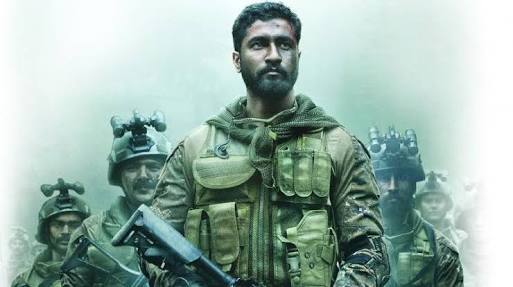
 Kanishka Uncensored