‘Dhadak 2’ Review: A Bold, Unflinching Look at Caste 

Dhadak 2 is Shazia Iqbal’s Hindi adaptation of Mari Selvaraj’s Tamil film ‘Pariyerum Perumal’. It portrays an inter-caste couple’s fight against caste prejudice. 

Neelesh (Siddhant Chaturvedi), a Dalit student of law, has a simple and straightforward goal: to study hard, become a lawyer, and lift his family out of poverty. He avoids political activism, lest it derail his long term plans. He finds an empathetic friend in Vidhi (Tripti Dimri), who helps him understand the subject. And, like what happenes in most college friendships, theirs deepens into love.

Neelesh’s subservience and timidity get him nowhere: he is constantly reminded of his place in the caste hierarchy, whether in college or at social gatherings. Neither can he claim his right as a student, nor can he escape casteist taunts. 

His struggle is reminiscent of real-life Dalit students who paid the price for speaking out. The case of Senthil, the Dalit student in the University of Hyderabad who took his own life, comes to mind instantly. And when Shekhar (Priyank Tiwari), Neelesh’s contemporary in college and a fellow Dalit, resorts to the extreme step after being suspended for protesting, one cannot miss the resemblance with Rohit Vemula.

When his face is disfigured by upper caste students in college, the lion in Neelesh awakens. Siddhanth Chaturvedi plays Neelesh’s transformation into a confident and assertive individual, who will not take injustice lying down, convincingly.

Like Siddhant Chaturvedi, Tripti Dimri does full justice to her role. She is not the hero’s usual sidekick and carves out an identity and place of her own. Bold and outspoken, she doesn’t hesitate to ask uncomfortable questions, even if that means challenging her family’s honour. 

Full marks to Shazia Iqbal for boldly engaging with a sensitive theme like caste. She highlights the humiliation Dalit students face in our universities, capturing the stigma in all its rawness. She also addresses the problematic issue of upper caste family honour with the same brutal honesty.

Dhadak 2 is powerful in its treatment of caste. The crisp narrative, sharp dialogues, and engaging story enhance its appeal. It is a must-watch that doesn’t just entertain but compels reflection. The quote at the beginning of the movie sums it up best:

“When injustice becomes law, resistance becomes duty”

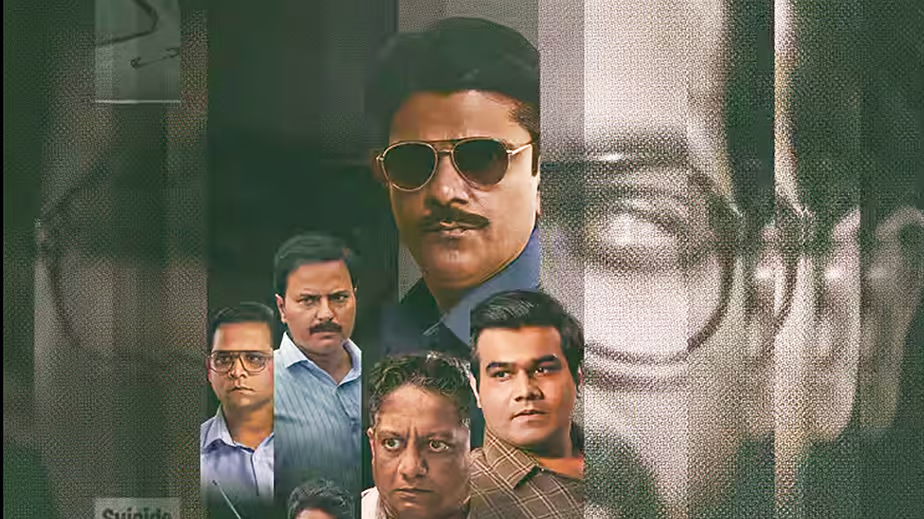
Review of The Hunt – The Rajiv Gandhi Assassination Case

‘The Hunt – The Rajiv Gandhi Assassination Case’, is an OTT series about the probe into the assassination of former Prime Minister Rajiv Gandhi in Sriperambdur in 1991. As the country comes to terms with the brutal murder, a Special Investigation Team (SIT), set up to nab the culprits, swings into action.

Establishing the LTTE’s role in the assassination is not difficult. The real challenge lies in nabbing Shivarasan, the mastermind of the plot. Amit Sial plays D.R. Karthikeyan, the lead investigator. In the words of his superior, Karthikeyan’s is the toughest job in the world. He faces pressure from all quarters – politicians, pro-LTTE Tamils, and a restless team. Yet, with a restrained demeanour, Sial impresses as the stoic Karthikeyan who rises to the challenge and keeps his team united & focussed on the ultimate aim. He is the fire that keeps the team’s spirit burning and the officer who leads by example. 

While showcasing the brilliance of the SIT, The Hunt says a lot about the support that the LTTE enjoys in Tamil Nadu. According to Inspector Ragothaman, the only Tamil officer in the SIT, “One man’s terrorist is another man’s freedom fighter.” A small sentence that speaks volumes.

Director Nagesh Kukunoor manages to evoke drama, intrigue, and suspense. Every scene captures the tension of the investigation, making you want more. The sharp editing and concise script also do their bit to engage you. I also laud Kukunoor for ending the series on an unresolved note. Yes, the SIT nabs Shivarasan and his team of LTTE operatives, but, as officer Amit Verma puts it, with Shivarasan’s death, the truth is also buried. The audience grapples with more questions than answers, a lot like life…..

Featured

Why I liked Jaane Jaan

Set in the hilly tracts of Kalimpong, ‘Jaane Jaan’ is a movie about Maya D’Souza (Kareena Kapoor Khan), a single mother. When she is accused of murder, she finds unanticipated help from her neighbour, the socially inept but gifted Mathematics teacher Naren Vyas (Jaideep Ahlawat).S

Kareena Kapoor Khan, a seasoned actor, delivers a brilliant performance in a new role. She deftly plays Maya, the cafe owner struggling to make ends meet. While we are used to seeing her exude oomph, in Jaane Jaan, she manages to impress in a middle-aged avatar. Her grace wins her many admirers, most notably Naren. As a result, Naren visits Maya’s cafe often, more for her and less for the egg-fried rice.

Jaideep Ahlawat is terrific as the steely Naren Vyas. Lonely and depressed, he masks his unhappiness with dignity. He cannot articulate his fondness for Maya, whom he loves most after mathematics.

Vijay Varma shines as Inspector Karan Anand, the Mumbai police officer tasked with finding corrupt cop Ajit Mhatre’s killer. He is sharp and trained to look beyond the obvious. However, he is no match for the genius of Naren.  

Varma’s performance is noteworthy because he, being a newcomer to Bollywood, takes on Kareena Kapoor Khan, one of the industry’s most accomplished actors, with confidence. Also, while Karan is attracted to Maya, the movie doesn’t succumb to the temptation of melodramatising the two.

Jaane Jaan is also a story of the triumph of the human spirit against all odds. Naren and Maya, both waging a battle on their personal fronts, show the determination and courage to craft their destinies. While Maya is moving on after a messy marriage, the suicidal Naren finds in Maya a reason to live. Their never-say-die spirit is the thread that holds the story together.

Jaane Jaan is also noteworthy for its crisp narrative. There are no wasted scenes or unnecessary dialogues, and the makers brilliantly pull off a story around a murder cover-up.

What is also unique about Jaane Jaan is how it uses Mathematics to enrich the narrative. Right from Naren’s empathy for a struggling student, Naren’s tireless efforts to solve complex mathematics problems, and the clever use of the subject to obfuscate the truth, the power of mathematics is on full display.

The investigation into Ajit Mhatre’s murder hits a dead end. While Maya is let off due to a lack of evidence, Naren finds the right environment to pursue his passion for mathematics – jail.

Sherdil: The Pilibhit Saga Review

Sherdil: The Pilibhit Saga is a movie about Sarpanch Gangaram (Pankaj Tripathi) whose village is on the cusp of poverty and indebtedness as a result of crops destroyed by wild animals. Desperate for a solution, Gangaram plans to get killed by a tiger so that his village can benefit from the compensation money. 

As Gangaram chalks out the nuances of his bizarre plan, one cannot help but smile at the purity and innocence of his purpose. Tripathi’s genius leaves you with no choice but to grow fond of Gangaram.

Based on true events, Sherdil: The Pilibhit Saga does more than send a chill down your spine. It exposes the rampant red-tapism and apathy to the plight of the poor in government offices. In the opening scene, Gangaram laments to a government official about how he has been running from pillar to post trying to get help, but to no avail. The officer’s smugness in attributing the suicides to mental illness leaves you fuming.

Sherdil: The Pilibhit Saga also ventures into the philosophical realm. For example, when a hungry Gangaram refuses meat because he believes that a vegetarian like him will go to hell, the poacher Jim Ahmed (Neeraj Kabi) replies with an existential answer. He says that humanity is but a tiny blip in the history of the universe. Men may come and men may go, but the laws of the jungle go on forever. 

Through Sherdil: The Pilibhit Saga, Director Srijit Mukherjee comments on contemporary Indian politics. For instance, when Gangaram’s story reaches the media, newsrooms across the country engage in heated debates trying to fix the blame for his situation. The joke is not lost on the viewers when the spokesperson of a political party reasons that since it was Nehru who christened the tiger India’s national animal, it is he who is at fault. According to the spokesperson, if Nehru had instead chosen the cow, things would not have come to such a pass. 

Gangaram’s heartfelt speech in court towards the end sums up the mess the Indian state has made of forest-related issues. His demand for a ‘human reserve’ to protect poor people like him is both revealing and depressing. While such reserves are sure to protect their human inhabitants, they also relegate humanity to the status of animals. 

Given that Sherdil: The Pilibhit Saga is shot mostly in the forest, the scope for visual appeal was limited. However, the crisp dialogues and powerful acting make up for the limitation.

Sherdil: The Pilibhit Saga is a must watch because the cast (led by Pankaj Tripathi) and the crew (led by Director Srijit Mukherjee) make you laugh and think at the same time. 

‘Darlings’ Review

‘Darlings’, Jasmeet K Reen’s directorial debut, is a movie about Badru (Alia Bhatt)’s struggle with an abusive husband Hamza (Vijay Varma). The film showcases Badru’s metamorphosis from a gullible wife to a more assertive individual aware of her rights. 

Badru’s mother Shamshu (Shefali Shah) is her daughter’s bedrock of support. She sees through Hamza early on and advises Badru to separate, but to no avail. It takes a miscarriage to make Badru realise that Hamza is like a scorpion and that friendship with a scorpion is fraught with danger.

The film portrays how well-meaning attempts to make Hamza kick the bottle boomerang on Badru. Badru believes that Hamza will turn over a new leaf if he quits drinking. But Hamza, who gives up drinking after a warning from his doctor, continues to misbehave. Alcohol is clearly an excuse for Hamza’s gas lighting. With this, the film also challenges the notion that men will be men.

Darlings also portrays how lower-middle-class victims of abuse often let go of the chance to get justice because they fear social stigma.

Alia Bhatt and Shefali Shah breathe life into a mundane Mumbai Chawl with their acting prowess. They are the energy and life of their neighbourhood with their deft portrayal of lower-middle-class women fighting poverty and abusive partners.

Darlings also legitimizes the use of violence to counter domestic abuse. Quite understandable, given Badru’s desperate situation vis Hamza.

Despite its dark theme, Darlings has its lighter moments. Whether it is the confused cop Rajaram Tawde (Vijay Maurya) or ticket collector Damle (Kiran Karmakar), you smile when they occupy screen space. Of course, Alia Bhatt and Shefali Shah are the ones who make you laugh the most. 

Vijay Verma’s portrayal of the mean Hamza Shaikh deserves applause. Being paired opposite a formidable actor like Alia Bhatt must have been daunting. Yet, Verma rises to the occasion with a performance that is sure to stand him in good stead in future Bollywood projects.

The statutory warning at the end sums up the movie aptly: Violence against women is injurious to health. 

SUPER 30 REVIEW

Super 30              s2

Vikas Bahl’s Super 30 is based on the life of brilliant mathematician Anand Kumar who helps thirty smart but underprivileged children prepare for entrance exams to the IITs. The film showcases how poor students with meager resources struggle but eventually triumph with guidance from Kumar.

Hrithik Roshan, who plays Anand Kumar does justice to his character. Having got used to seeing him in romantic or superhero roles, it must have been challenging to play a mathematics teacher. The audience would naturally find it difficult to relate to him. However, one can spot the effort that he has put into fleshing out Anand Kumar’s role. Take for instance the way he magnanimously responds to the humiliation meted out to him by the librarian of a reputed college. Another instance is when Kumar manages to get into Cambridge but is short of money to realize that aspiration. He sees his father die trying to raise money for the purpose. This scene is a sad commentary on how intelligent youth from poor backgrounds lose opportunities merely because of their economic status.

Super 30 successfully engages with the question of privilege and class bias in other ways too. For example, Kumar is seen motivating his students who are weak in English to stand up to their counterparts from English-medium schools. The scene where they do a skit in English with privileged kids as an audience is praiseworthy. The skit, an idea conceived by Kumar teaches his students to believe in themselves and never give up. In many other scenes too Kumar is seen emphasizing the importance of education to his students.

Anand Kumar is regarded as a precious teacher by his students, and he is in great demand from the rich and poor alike. But while batting for the rights of the poor, Vikas Bahl’s Super 30 does not succumb to the temptation of painting privileged children as villains. For example, there is a scene where a rich former student of Kumar asks him why he is depriving them of his teaching. Is it because he is privileged? The irony of the situation is stark.

Another notable scene in Super 30 is when the local MLA Shriram Singh (played by Pankaj Tripathi) breaks his promise of helping Anand Kumar. Hrithik portrays Kumar’s disappointment with ease and confidence. Full marks to Pankaj Tripathi for making us cringe at his crookedness and pettiness, either in the pipe dreams he sells to Anand Kumar and the rural folk or in his involvement with the coaching mafia. He truly makes you want to hate him.

Super 30 has its share of comedy too, such as when Hrithik enlightens his first love Supriya (played by Mrunal Thakur) on the mathematical ratio used to measure beauty. I never knew that such a ratio existed and was pleasantly surprised to learn of the same. The movie thus weds Anand Kumar’s obsession with mathematics with his love for Supriya.

Mrunal Thakur depicts Supriya, a girl from an elite background who doesn’t carry that status on her sleeve. After all, she is the daughter of a rich businessman but is dating the son of a postman. She is neither too brash nor too simple but subtly gels into her character. One loves her in the second half when she steals an important document to rescue Anand Kumar’s dream. She is a delight to watch when she tells her IAS officer husband (who is aware of her past with Kumar) that her choice of men has always been sound! For a newcomer it is a great start.

Personally, I sympathized with Lallan Singh’s character (played by Aditya Srivastav) for being let down by Anand Kumar. His position is unenviable and hence credit is due to Srivastava for portraying the money hungry head of a successful coaching centre who is eventually defeated by Anand Kumar.

Anand Kumar’s innovative teaching techniques are at the fore in Super 30. The maths, physics and chemistry concepts are explained well and used intelligently in the fight sequences which are worth watching purely for this reason. They mask any kind of boredom that might arise owing to their length.

Anand Kumar’s fight against a corrupt system and his obsessive need to help needy students reminds one of Robin Hood. He is willing to risk his life for the sake of educating his students. The second half is replete with scenes of violence when Anand Kumar’s rivals gun for his blood.

The larger point that Super 30 makes, which is that students from poor backgrounds have it in them to be successful, provided they are smart and determined, is not lost on the audience. This forms the heart and soul of the movie and is as precise as one of Anand Kumar’s maths lectures. The movie’s heart literally beats to the tune of justice for the underprivileged.

Super 30 is a bold take on India’s education system that is corrupted by nepotism and privilege. Considering that it is based on a true story makes it all the more relevant.


 

The Uri Effect, Post Pulwama

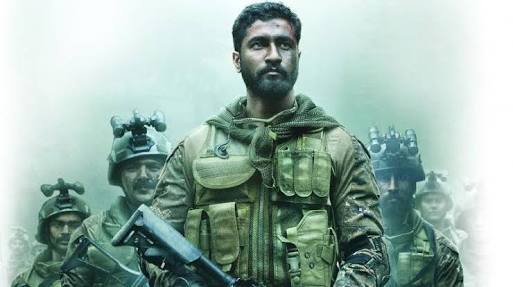
Uri, the movie about India’s surgical strikes on terror launch pads in Pakistan Occupied Kashmir resonates with (or maybe even determines) the present mood in India, post Pulwama. The movie somehow demands that everyone participate in experiencing a “Josh” or acting out on it (by beating up Kashmiris, threatening Muslims who are deemed anti-national by default). The protagonist Major Vihan Singh Shergill, played by Vicky Kaushal is an ace military strategist who is forced to return to home to care for his mother, an Alzheimers patient. During this time he loses his brother-in-law, Major Karan Kashyap (played by Mohit Raina) in the Uri attack. Thirsty for revenge, he begs his commander to let him return to the frontlines for the greater good of the motherland.
In the first half of the movie, Major Vihan plays the role of a responsible son, loving uncle and friendly brother, all at once. The camaraderie he shares with Major Karan is typical of the armed forces, but there is nothing more that endears you to him as an actor. His performance is clichéd, lacking depth or nuance. After seeing him in Sanju, one feels he has not done justice to his talent. But the war hysteria and passionate anti-Pakistan slogans are used effectively to mask the otherwise dull performances.
The second half of the movie revolves largely around the planning and execution of the surgical strikes. The discovery by Ajit Doval (played by Paresh Rawal) of a bird-shaped drone invented by a DRDO intern is the only thing that adds a spark to the movie. Unfortunately, it is not developed enough.
The manner in which the scenes are stitched up leaves a lot to be desired. Even the war scenes are just deafening gun fire and as expected, the Pakistanis are shown as no match for the Indians.
By this time Major Vihan’s family – his mother, widowed sister and niece –seem to be erased from the audience’s memory. If the movie aims to prove that the call for revenge supersedes all other responsibilities, it fails to do so again. And it is this attitude that is on display in the India of today. Unfortunately, one (fictitious) man’s call for revenge has become a personal call to the youth of the country. People have taken it upon themselves to teach Kashmiri students a lesson after the terror attack in Pulwama, despite no evidence of their involvement. Innocent Kashmiris across the country face persecution for deeds they are not guilty of.
There are other problems with the movie too. For instance, the euphoria of revenge for the Uri martyrs drowns the audience’s capacity to think critically, leaving no scope for reflection. Doesn’t one wonder why war widows dressed in white (in this case Vicky Kaushal’s sister) are left in the lurch as their husbands are on the frontlines, and only see their partners in coffins? Families of military personnel always struggle with their absence. And when soldiers die, they leave behind widows and orphaned children. Nowhere in the movie are these dilemmas addressed. Instead, war in all its madness is glorified. True, the movie is essentially about war and the sacrifices that our soldiers make. But is it not possible to shine a torch on the senselessness and madness of war too?
According to “Uri-The Surgical Strikes”, the ends justify the means. The audience is encouraged to sympathize with Major Vihan Singh Shergill’s character and some even echo ‘How’s The Josh’ on the other side of the screen. Moreover, this echo also drowns any serious critique about issues that have recently come to light (bad food for our soldiers, no leave, poor treatment of jawans, harsh weather conditions etc).
“Uri-The Surgical Strikes” leaves nothing to one’s imagination. It does little more than glorify the armed forces and whip up war hysteria. Of course, the endless scenes of violence and gore fill the audience with ‘Josh’. However, what is missing is a calm and reflective assessment on the failures of the Indian state that may have alienated Kashmiris and minorities Where is the attempt to win the hearts of young Kashmiris? The Kashmir Question is a very complicated one and needs to be dealt with at various levels, beginning with dialogue, dialogue and dialogue!images

Stree – An ode to women’s empowerment


Women, especialy those in rural India are the victims of a medieval mindset. Society suspects their character and hounds those daring to challenge the status quo. And when they marry against the wishes of their parents, they are killed as punishment.

As the name suggests and the movie confirms, ‘Stree’ is an ode to women’s empowerment. However, in trying to be so, it mixes up many issues resulting in a hotch-potch of ideas. It is set in the village of Chanderi, the residents of which believe in a female ghost that appears during the annual 4-day festival. This ghost, named ‘stree’ by the occupants is believed to kidnap men every night of the 4 day festival,leaving only his clothes behind. While this may sound absurd, legend has it that the ghost is actually the restless soul of a newly wed bride, killed before she could consumate her marriage with her lover. Naturally, the innocent village folk, especially the men, are terrified. The only way the village protects its men is by writing “O Stree Kal Aana” in Hindi, which means “Stree, come tomorrow”, on the walls of every home. This, the villagers claim, is bound to shoo the ghost away and protect the men folk.

Vicky (Raj Kumar Rao) is the son of a tailor in the village with modern, rational beliefs. He rubbishes any talk of the ghost ‘Stree’. However, he is forced to change his stance when he loses one of his friends to the dreadful ghost. And as the village comes to terms with the loss of some of its men to ‘Stree’, Shraddha Kapoor(Stree) mysteriously arrives on the scene, fuelling suspicion. As she gets friendly with Vicky, the latter’s friends come to believe that she might indeed be the human incarnation of the dreaded ghost. Their anti-Shraddha comments are also laced with jealousy towards Vicky.

After Vicky’s friends realise they were wrong, they, along with Shraddha Kapoor & Rajkumar Rao embark on a mission to rid Chanderi of this annual menace. Vicky is entrusted with the job of leading the hunt for Stree. Although initially reluctant, he comes around and goes all guns blazing.
Pankaj Tripathi, who plays the role of a fraud scholar must be lauded for his comic timing. The star cast, led by Raj Kumar Rao & Shraddha Kapoor also elevate the cinematic experience with their funny dialogues. They engage the audience with witty one-liners.For example, when ‘Stree’ goes about abducting men, Vicky and his friends joke that she chooses her victims based on their Aadhar cards!

The film is not just funny but also a commentary on current political issues, within the larger canvas of feminism. For instance, when Vicky is told that he was born to a prostitute, he, although shocked initially comes to accept his parentage. After all, prostitutes are human beings too and are so out of compulsion, not choice. ‘Stree’ also condemns honour killings and how inter-caste marriages cost young couples their lives, merely for defying their elders.Strangely, menare shown as weak and vulnerable, a first of sorts in Bollywood. However sloppy the movie might be, it does succeed in making a powerful statement on women’s rights. Its underlying theme is not so much the Ghost ‘Stree’ as the terrible conditions that women face in India.

Why I Liked “Andhadhun”


‘Andhadhun’, by Director Sriram Raghavan is a quirky story about a blind piano player Akash (Ayushman Khurana) who is training himself for a competition in London. He befriends Sofie (Radhika Apte) who runs a restaurant and becomes her resident musician. As Amit Trivedi songs fill the air, Akash and Sophie allow their feelings to expand. His melodious pieces impress Pramod Sinha (Anil Dhawan), a 70’s star of Bollywood, who invites him home to surprise his wife Simi (Tabu) on their wedding anniversary. But when Akash turns up at his home, things are not what they seem to be. It is now that the story takes a dramatic turn.

The sequence of events that unfold after Akash’s first visit to Simi’s home are well crafted and neatly presented. The background score is reminiscent of 70’s music in Bollywood. Anil Dhawan is an actor-turned real estate trader who is very fond of his wife. He is generous and naive and willing to go to great lengths to please her. He is the personification of a self-obsessed movie star, with floppy hair and an uncorrupted view of the world.

The tone of Andhadhun is freakish and mean and the pace as feverish as that of a late train trying to make up lost time. The characters are unprincipled in a businesslike way as they lay claim to money that doesn’t belong to them. Crimes for money, lust and power take you through corridors of organ extraction rackets, sleaze, and unexpected twists and turns carried out with impunity, at a breathless pace. After the interval, you feel like you are in a race with no end in sight. There is nothing smooth or effortless about the crimes. The end always seems to justify the means.

Raghavan succeeds in holding the audience’s attention with a strong plot. Good performances by Khurana and  Tabu also help. There are funny moments in the cinema too. One cannot help but feel sorry for Akash as he tries to wriggle out of tough situations that are not entirely his doing. For the most part, the movie is crisp and does not bore you.

Ayushman Khurana gets under the skin of Akash’s character and gives you little reason to doubt his ability as an actor. If playing a visually challenged artist were not tough enough, the drama also revolves around his blindness. Tabu is outstanding too. Cold, calculative and surgical, she is even willing to kill to hide her misdeeds. Radhika Apte has improved considerably from her past performances such as those in “Parched” and “Badlapur”. As in his previous films like  Ek Hasina Thi and Johnny Gaddaar, Raghavan employs minor characters to spring major surprises with ease. Chhaya Kadam as a wannabe criminal way out of her league is too funny for words. Zakir Hussain, a regular actor in Raghavan’s films, makes sure you sympathize with his character, no matter how wrongful his deeds. Ashwini Kalsekar, another Raghavan regular, is terrific as the wife of the burly police officer Manohar (Manav Vij).

Andhadhun is easily the first real Pune noir, proving that pusillanimous behavior can exist comfortably  among the city’s older houses and newer complexes. Raghavan’s talent for recasting ordinary people into criminals who know their job and his use of locations and sharply sculpted characters to advance his plot is put to great use in Andhadhun.

At a current run time of 139 minutes, Andhadhun slides into place as smoothly as one of Akash’s piano pieces.


My thoughts on Mulk

Mulk, Anubhav Sinha’s directorial debut makes you think of Islamophobia post 9-11. As countries across the world grapple with the menace of terrorism, ordinary Muslims are referred to in the same breath as terrorists. India is no exception.

The movie takes a hard look at religious prejudice in the context of Islamic fundamentalism. Set in Varanasi, it studies a Muslim family that loses a son to a terrorist attack. Shahid (Prateik Babbar) is a misguided youngster who helps organize one. He is shot dead by anti-terror squad officer Danish(Rajat Kapoor). But worse things await the family.

Shahid’s father Bilal (Manoj Pahwa) is accused of aiding his son. The needle of suspicion points to him on the basis of hard evidence. Bilal’s older brother Murad (Rishi Kapoor) and Murad’s daughter-in-law Aarti (Tapsee Pannu), both lawyers, swing into action.

Varanasi is a melting pot of different religious groups. The city represents everything that modern India stands for – secularism, tolerance and democracy. However, Shahid’s death destroys this notion.

The courtroom drama is an extension of the divided neighbourhood. The public prosecutor Santosh (Ashutosh Rana) is convinced that the whole of Bilal’s family has terrorist links. His courtroom arguments betray a disdain for Muslims and their faith. He tries to establish a link between polygamy ( a common practice among Muslims) and Jehad. The screenplay has some moments of rhetorical flourishes. Many scenes, however, are very to-the point.

The movie boldly questions the stigmatization of Muslims, even if it does so without elegance. Anubhav Sinha’s heart is in the right place, although not his head. His enthusiasm for the theme seems to get the better of him. While trying to simplify a complex theme for the sake of creating a thought provoking and entertaining viewing experience, Anubhav Sinha enters tricky territory. In trying to differentiate the Good Muslim from the Bad, the Director dilutes the larger argument that prejudice, in itself, is cringe worthy. Murad falls into the trap of proving his nationalism despite emphatically stating that he does not need to.

Mulk is also on shaky ground when probing the religious roots of terrorism. The larger political context responsible for the marginalization of Muslims is condensed in a single sentence : if you want to understand the roots of religious divide, scan the calendar for the upcoming election schedule, the judge declares.

Despite its simplified understanding of a complex theme, Mulk is praiseworthy for breaking stereotypes. An average terrorism thriller would have shown bearded, gun wielding Muslim men.  However, Mulk manages to avoid that to highlight the real problem of scaremongering that is playing out beyond the screen and in far more monstrous proportions at the national stage.


Full marks for relevance and the sincere performances. Apart from strong turns by Tapsee Pannu, Ashutosh Rana & Rajat Kapoor, the film has a good cameo performance by Kumud Mishra as the judge who keeps combative lawyers in check. Mulk restores the faith in the judiciary to set things right, and Mishra’s nuanced performance allows the fallacy to float.

It is obvious from Mulk that Rishi Kapoor has given his best. He succeeds in reflecting his character’s bewilderment, anger and eventual resolve. He turns in a dignified performance amidst strong ones by the remaining cast. Movie buffs will recall his slimmer self in ‘Amar, Akbar, Anthony (1977). That movie stood for communal harmony and peaceful co-existence. 41 years later, Mulk does too!