
I live close to my school and walk back home every day after classes. Usually, I take the shortest route on my return. This has often led me to wonder about the shops and people that lie on the other longer routes. I once shared my curiosity with a friend, who said that he knew of a row of antique shops on the way and that they were worth a look. He said that there were other shops too but couldn’t recollect what they sold. His selective memory didn’t surprise me, as I knew of his close bond with antique pieces. His father was an antiquarian with a large collection of antiques at home. Intrigued, I took the opportunity to go by the less-taken road back home yesterday.
The antique shop had an inconspicuous look with a broken, slanted board. The board had something vague inscribed on it, which I could decipher as ‘Roy’s Antiques’. Piqued, I opened the door and entered.
I saw rows of animal & human skeletons arranged on the walls. The stuffed zebra, horse, monkey, stag, and deer were intimidating. There was also a jar with a dead anaconda preserved in formalin. It reminded me of my biology teacher, Mr Dawson’s, laboratory in school. I sensed the human skeleton staring hard at me and did my best to remain calm. The other objects inside the shop were equally spooky, and I wished I hadn’t entered.
As I approached the sales counter, an old, frail man greeted me. His toothless smile complemented the antique collection in his shop. He welcomed me and asked if I’d like to buy something.
I was visiting the shop out of sheer curiosity. I had not planned to buy anything, so I replied by saying I was just a window shopper. He grinned once again and asked me to window-shop to my hearts content.
Once done with the large display of human and animal skeletons, I bid goodbye to the old shopkeeper and left. I heaved a sigh of relief, as I wasn’t sure if I’d come out in one piece, unlike the antique pieces I had just seen.
As I was walking back home, I remembered that my friend had mentioned not one but many other other such shops on the road. So I looked and found, to my surprise, five antique shops arranged neatly in a row. But having just been to one of them, I hadn’t the guts to enter another. I let them be and hurried back home.



 I have been a smoker for the past fourteen years. I remember the day when I was offered a cigarette by a friend over a cup of tea in a Hyderabad restaurant. It was the end of a tiring day and my first puff seemed divine. It was relaxing, liberating and provided me with a release from a stressful and challenging work environment.
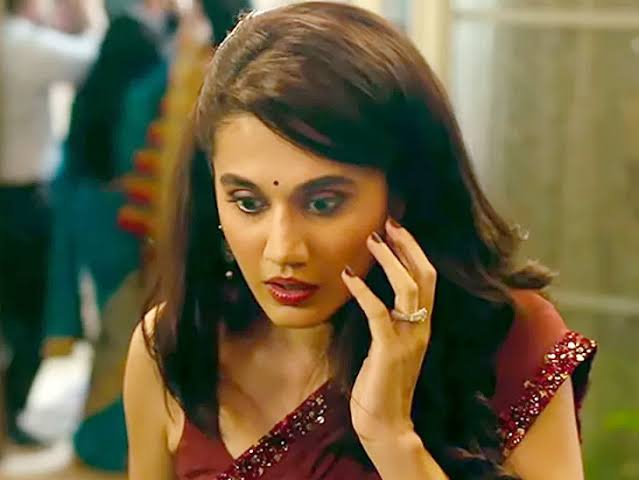 Thappad is a movie about Amrita (played by Tapsee Pannu) who fights her husband Vikram (played by Pavail Gulati) for treating her like a doormat. It revolves around the humiliating slap that Amrita receives from Vikram and through the story, the film addresses the normalisation of domestic violence in Indian society.
 Kanishka Uncensored