Day 2 at Karwar

We wanted to start the day with a visit to the beach and, having crossed the gate, found ourselves in a wooded area with a path. Nothing, not even a signboard, indicated where the path was leading. Doubtful we were on the right track, we followed a pack of dogs. Something told us that they would lead us to the beach. Sure enough, they did. 

The water was lower, separated from the road by an embankment. At intervals along the embankment, steps led to the water below. Delighted, I changed into my swimming trunks and began my descent. Oblivious to the moss on the steps, I slipped and fell with a thud. 

Fortunately, the fall was minor. My back ached a bit, but nothing broke. Also, I wouldn’t let the accident crush my spirit, so I gathered myself and entered the water slowly, finding a foothold quickly. The sand, pebbles, and shells tickled my feet. 

I was forced to cut my time in the water short. It was getting deep and dangerous, and I didn’t want to take any chances. 

Disappointed, Swapna and I returned to the resort. Luckily, we spotted an advertisement for a boat ride in the lobby. We contacted the boat owner and booked a slot for 9. 

The ride began on time. We had five forest officers for company who were on holiday just like us.

As we made our way through the choppy waters, the boat tilted to one side, spooking us. The boat owner, who knew the sea well, asked us to relax.  

Soon, the shore turned into a distant speck, shrinking in importance in contrast to the vast expanse of water. We saw dolphins swimming close to our boat, occasionally flying out of the water to breathe. A thrilled Swapna clicked their photographs, irreverent to the splashing water. 

During our hour-long sea ride, we got friendly with the boat owner. He advised us to visit Canacona in South Goa. 

The beach had a spattering of locals, tourists (primarily foreign), and shack owners. Children made castles in the sand as their parents basked in the warm sun. 

Eager to explore, Swapna and I walked down the beach. We saw several shacks dotting the area and entered one after a while.

The shack was sparsely populated, mostly with tourists. One was reading a book, taking advantage of his quiet surroundings.

It was time for lunch. We settled on a pair of recliners and scanned the menu. The wide choice of coastal cuisine was tempting. We couldn’t hold ourselves further, so we ordered Prawns Vindaloo and Chapati. We relished every bite, licking our fingers in delight. We ended the meal with Bebinca, a Goan dessert. Served with vanilla ice cream & chocolate sauce, it won our hearts.

After lunch, we settled on the recliners, facing the sea. As the warm breeze blew against us, we slept peacefully. When we awakened, it was evening. We returned to the resort on time for dinner. 

Seeing my tanned face, the staff at the resort asked with a smile, “Kahan ghoom ke aaye, saab?”

FIRST IMPRESSIONS OF KARWAR

After our whirlwind marriage in Hyderabad, Swapna and I were brimming with excitement for our upcoming honeymoon in Karwar. We were eagerly looking forward to the trip, hoping it would provide a much-needed respite after the hectic weeks leading up to our wedding.

As planned, we took a bus to Karwar on Tuesday, October 8. After a bumpy ride, we disembarked at the Karwar municipality the following day. We hired an autorickshaw and landed at Sterling. The staff applied tilak on our foreheads to welcome us. They knew we were newly married. 

The room was cosy, just perfect for the two of us. After a refreshing shower, we were eager to explore the local cuisine. I had heard so much about Karwar’s delectable fish dishes, and I was excited to try them. When I saw Pomphret on the menu, I knew I had to have it. The fish, marinated with chilli, salt & spices and shallow-fried, was a burst of flavour. With each bite, I could feel my fatigue melting away, replaced by a sense of rejuvenation. 

After lunch and a quick nap, we walked down to the reception. Nisha, a part of the support staff, invited us to a Karaoke event at the bar. Since Swapna and I were free that evening, we accepted the invite. 

Upon entering the bar, Nisha placed the mike in my hands. I didn’t want to play spoilsport, so I agreed to sing. 

It had been a good twenty-five years since I last sang, back in my school days. I certainly didn’t expect my voice to retain its youthful clarity. But as I stood there, singing in harmony with the lyrics on the screen, I felt a surge of inspiration. The singer in me had been reawakened.

After ending the day on a melodic note, Swapna and I had dinner. We then retired to the room, keenly anticipating our visit to the beach early next morning. The thought of the sun rising over the horizon, the sound of the waves crashing against the shore, and the feel of the sand between our toes filled us with excitement.

A Fantastic Woman – A Review

A Fantastic Woman – A Review

While it is difficult to ascertain whether, historically, transgenders enjoyed a unique place in Indian society, the common belief is that Kings used them as henchmen and were sought after by newly-wed couples for blessings. Whatever their role, it is a fact that with the entry of the British into India, life for the community took a turn for the worse. The British were uneasy with the idea of a third gender and accused the community of perpetuating crime. While newly independent India relaxed laws against transgender people, the media became guilty of stereotyping them. Mocked for their effeminate personalities, they were, and still are, portrayed as beggars and criminals.

Indeed, community stereotyping is a universal phenomenon. Although India has a long way to go before accepting transgenders for who they are, Chile is showing the way in furthering their cause. Director Sebastian Lelio’s ‘A Fantastic Woman’, a movie about a transgender female Marina (played by Daniela Vega) and her struggle against prejudice, is a step in that direction. 

Working as a waitress and club singer in Santiago, Chile’s capital, Marina is in a relationship with an older cis man, Orlando (played by Francisco Reyes). Love is in the air as the couple celebrates Marina’s birthday over a candle-light dinner. As the two embrace and dance, the audience cannot help but soak in the romance. The two seem made for each other and are heading towards a happy future. 

A tragic twist shatters Marina’s happiness when, on the night following the birthday, Orlando dies of an aneurysm. As the grieving Marina tries to come to terms with her loss, she faces the wrath of Orlando’s family. His ex-wife wants Orlando’s car back, his nasty son asks her to vacate the house, and the family forbids her from attending Orlando’s funeral. To make matters worse, the bruises on Orlando’s body make the police suspicious. Was Marina being paid by Orlando for sex work? Maybe the two had got into a fight that ultimately killed Orlando.

Despite the weight of her problems, Marina stays dignified and graceful. She battles her ghosts like a lonely but brave warrior, swimming against the tide of societal prejudice. The scene where she tries to walk straight, resisting the heavy wind blowing against her, accurately captures her courage, dignity, and stoicism in the face of adversity.

Director Sebastian Lelio portrays a never-seen-before aspect of transgender people, which is that of grace. He succeeds in demystifying the community and subverting its association with sordidness. In Marina, the audience discovers a caring, sensitive, and strong transwoman who defies stereotypes. 

I would have liked Sebastian Lelio to explore some more dimensions of Marina’s life. What were her struggles as a child growing up in Chile? While there is a brief mention of her sister and brother-in-law, the movie is silent about her parents. Unfortunately, the movie is too linear in portraying Marina’s life. A multi-dimensional portrayal of a transgender woman that goes beyond platitudes or prejudices would have been ideal. 

Despite its lack of depth, Director Sebastian Lelio’s ‘A Fantastic Woman’ has contributed immensely to the transgender community’s struggle for identity and place in society, becoming the first Chilean movie to win an Oscar. More importantly, the movie helped drive conversations on the transgender question, resulting in the fast-tracking of a gender-identity law allowing transgender individuals older than 14 years to legally change their name and gender, with no requirement for surgery or change in physical appearance. That this took place in a country as traditionally conservative as Chile is an achievement worth celebrating.

MANJUMMEL BOYS REVIEW

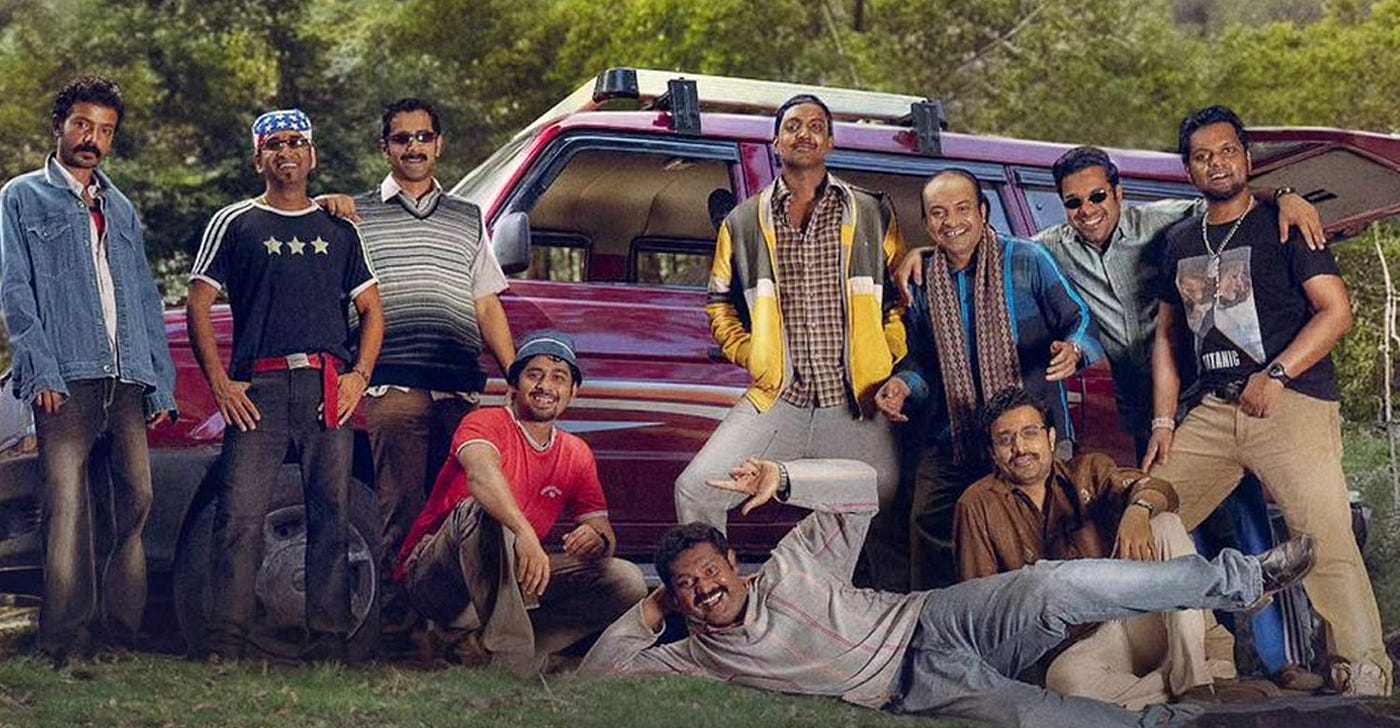
Based on a true story, Manjummel Boys portrays the daring rescue of Subhash, a youngster from Manjummel in Kerala, who slips into a hole in the Guna Caves near Kodaikanal. He is part of a group of friends on holiday during the Onam recess. 

As the movie unfolds, one cannot help but be drawn into the group of friends, initially judged for their childishness. Their unconventional behaviour is a testament to their unwavering loyalty towards each other, a theme that resonates and evokes a sense of camaraderie in the audience. 

Childhood and youth are unique. They are periods when the heart is pure, and everything looks possible. The lust for adventure overpowers the wisdom of caution. Manjummel Boys accurately depicts these nuances, forcing you to grow fond of the boys.

The cinematography stands out for its sharpness and accurate framing of shots. Given the precarious geography of the Guna caves, Director Chidambaram deserves applause for realistically recreating the insides of the caves.

Manjummel Boys is also a sad commentary on the police’s ineptitude and incompetence, compelling the audience to curse their lackadaisical attitude.

Manjummel Boys’ most significant achievement is its showcasing of the triumph of the human spirit against all odds. In this context, I remember a common saying, “Tough times do not last. Tough men do”.

VISIT TO BELUR, HALEBID, AND SHRAVANABELAGOLA

Last weekend, I was on a sightseeing tour of Beluru, Halebeedu, and Shravanabelagola. Located in the Hassan district of Karnataka, these towns rose to prominence during the reign of the Hoysala Emperors in the early part of the first millennium and are witness to a slice of medieval Indian history.

We began the tour with a visit to Beluru, a town famous for the Chennakesava Temple (Chenna means Handsome & Kesava is an avatar of Lord Vishnu). The temple was commissioned by the Hoysala King Vishnuvardhana as a tribute to Lord Vishnu in 1117 CE. It took one hundred years to construct and use three generations of workers.

The Chennakesava Temple combines fine architecture, exquisite sculpture, and detailed relief work. Its walls are replete with stories from the Mahabharata, Ramayana, and Puranas. Despite many attacks by Alauddin Khilji’s army, the temple has retained its splendour and is a living embodiment of resilience. 

Dedicated to Lord Shiva, the Hoysaleshwara twin temple at Halebeedu was also built by King Vishnuvardhana and houses the Hoysaleswara and Santaleswara Shiva Lingas. Like its counterpart in Beluru, it is notable for sculptures, intricate reliefs, detailed friezes, iconography, and inscriptions in North Indian and South Indian scripts.

What the two temples have in exquisiteness, the 58-foot Gomateshwara statue in Shravanabelagola makes up for in size. Dedicated to Baahubali, the son of a Jain Thirthankara, the structure is the world’s largest monolithic statue and one of the most important pilgrimage destinations in Jainism.

Thankfully, the weather in Hassan was pleasant. The day we landed, the clouds were on the verge of a cloudburst. Luckily, it did not rain, and as a result, the weather was perfect – neither too warm nor cold. This allowed me to soak in the beauty of Belur, Halebeedu, & Shravanabelagola and appreciate the nuances of their rich history.

Why I liked Jaane Jaan

Set in the hilly tracts of Kalimpong, ‘Jaane Jaan’ is a movie about Maya D’Souza (Kareena Kapoor Khan), a single mother. When she is accused of murder, she finds unanticipated help from her neighbour, the socially inept but gifted Mathematics teacher Naren Vyas (Jaideep Ahlawat).S

Kareena Kapoor Khan, a seasoned actor, delivers a brilliant performance in a new role. She deftly plays Maya, the cafe owner struggling to make ends meet. While we are used to seeing her exude oomph, in Jaane Jaan, she manages to impress in a middle-aged avatar. Her grace wins her many admirers, most notably Naren. As a result, Naren visits Maya’s cafe often, more for her and less for the egg-fried rice.

Jaideep Ahlawat is terrific as the steely Naren Vyas. Lonely and depressed, he masks his unhappiness with dignity. He cannot articulate his fondness for Maya, whom he loves most after mathematics.

Vijay Varma shines as Inspector Karan Anand, the Mumbai police officer tasked with finding corrupt cop Ajit Mhatre’s killer. He is sharp and trained to look beyond the obvious. However, he is no match for the genius of Naren.  

Varma’s performance is noteworthy because he, being a newcomer to Bollywood, takes on Kareena Kapoor Khan, one of the industry’s most accomplished actors, with confidence. Also, while Karan is attracted to Maya, the movie doesn’t succumb to the temptation of melodramatising the two.

Jaane Jaan is also a story of the triumph of the human spirit against all odds. Naren and Maya, both waging a battle on their personal fronts, show the determination and courage to craft their destinies. While Maya is moving on after a messy marriage, the suicidal Naren finds in Maya a reason to live. Their never-say-die spirit is the thread that holds the story together.

Jaane Jaan is also noteworthy for its crisp narrative. There are no wasted scenes or unnecessary dialogues, and the makers brilliantly pull off a story around a murder cover-up.

What is also unique about Jaane Jaan is how it uses Mathematics to enrich the narrative. Right from Naren’s empathy for a struggling student, Naren’s tireless efforts to solve complex mathematics problems, and the clever use of the subject to obfuscate the truth, the power of mathematics is on full display.

The investigation into Ajit Mhatre’s murder hits a dead end. While Maya is let off due to a lack of evidence, Naren finds the right environment to pursue his passion for mathematics – jail.

Breakfast at Malleswaram

My Sunday began with breakfast at Malleswaram’s Krishna Bhavan. Along with friends at Godrej Woodsman Estate, I was in the mood for authentic Kannada food, and Malleswaram, with its vast number of South Indian restaurants, was the ideal choice.  

We had planned to dine at CTR (Central Tiffin Room), but the long queue of customers discouraged us. After deliberation, we zoned in on Krishna Bhavan; it was close and made equally good food.

Krishna Bhavan is one of Bangalore’s oldest restaurants, famous for Dosas roasted in ghee and served with a dash of butter.  

We ordered a plate each to experience Krishna Bhavan’s culinary magic. Once the dosas arrived, accompanied by chutney and sambar, we wasted no time and got into the act of eating. We relished every morsel, and every bite reinforced Krishna Bhavan’s reputation.

After the first dosa, our minds told us it was time to stop, but our hearts felt otherwise. Deciding to listen to our hearts, we shared a plate of Vada, ‘Green Idly’, and Kesari Baath. 

‘Green Idly’ also happens to be a Krishna Bhavan speciality. It consists of small, fried idlis soaked in green leafy vegetable sauce. Quite unlike the soft idlis that South India is famous for, the frying renders it crisp, and the green sauce, quite strangely, reminds you of chilli chicken. 

Although every item we ordered tasted divine, the Kesari Baath stole the show. Keshri Baath is South India’s equivalent to Halwa. It combines the right amount of sweetness & richness and melts in your mouth like butter. A few amongst us decided to pack some; we were sure our families, especially the children, would enjoy it. 

After finishing a satisfying meal at Krishna Bhavan, we returned to the car. Although we had no alternative but to walk to the car, we realised that walking burnt a part of the calories that we had gained from the rich food. It also assuaged our guilt.  

I bid goodbye to my friends at the car and proceeded to my tabla class nearby. As I walked, I was eager for a repeat of the morning’s breakfast sojourn. Our group rarely spends time outside the badminton court, so a Sunday morning breakfast is an excellent opportunity to bond. After all, what is life without friends and food?

Mysore Diaries – Day 1

As I sit in my hotel room to record my first impressions of Mysore, I am unsure how to begin. Actually, these are not first impressions; my uncle, who loved traveling, visited Kodaikanal or Ooty with us and passed through Mysore often. As a result, I am familiar with tourist spots like the Brindavan Gardens, Krishnaraj Sagar Dam, and the Mysore Palace.

This time, I am with my mother for a conference on food security. She is going to speak on food fortification and its impact on livelihoods. Since the topic does not interest me, I plan to explore Mysore as she goes about lecturing.

But my travel will begin tomorrow, so I cannot say much about the places I am yet to explore. Yet, my ordeal with reaching the Bangalore railway station en route to Mysore this morning is worth mentioning. 

The Shatabdi Express to Mysore was due to leave Bangalore at 10.50 AM. Although my mother and I got ready in time by 9, finding an Uber wasted precious time. It took the app on my phone half an hour to allow a taxi and fifteen more minutes for the driver to pick us up. So we ended up leaving only at 9.45. The heavy traffic (something Bangalore is famous for) forced us to take an alternate route. This, coupled with the fact that the platform from which the train was to leave was unknown to us, made matters worse. And if you thought that was the end of our woes, you are mistaken. Majestic Railway Station, the point at which we were boarding the train, was jam-packed ahead of Prime Minister Modi’s scheduled visit. The BBMP, in a last-minute beautification frenzy, had blocked the entrance to the railway station. This forced passengers like us to disembark much before the station and walk for two hundred meters with luggage in our hands. My mother, aghast at the situation, argued with the taxi driver and local police.

I tried to keep my cool. At least I gave the impression that I was. So, upon reaching the platform, we got on to the nearest coach. We had no choice as the train was to leave any minute. Besides, the internal connection of all compartments made us feel confident. We had to cross seven coaches before we could arrive at ours. This took a while, but when we made it, both mother and son heaved a sigh of relief. 

The Island of Guypajama

Guypajama is a lush tropical paradise. A large variety of trees thrive on the length and breadth of the island. As you climb out of your boat and step onto the land, the smell of wet earth greets you. Guypajama is like any tropical region – warm by day and wet by night. 

As you walk around the island, you have leeches sucking the blood out of your feet. They are not painful and hard to discover. I spotted five of them clinging onto me once I returned to my room and removed my shoes. Some had sucked so much blood that they had grown to the size of a tennis ball. 

It is common to see snakes on the island. I spotted one the other day; it was about five metres long, had a hood and was hissing. It met the textbook definition of a cobra.

A thick canopy of trees blocks the sunlight. In some parts, thin shafts of light enter through narrow gaps in the foliage. 

Guypajama is a sensory feast. The air smells of damp earth; the sound of birds confirms again that you are in a forest, far removed from the bustling city. As the humid air engulfs you, you desire a bath.

I spotted a group of howler monkeys in the trees. Their hysterical laughter was annoying. I felt like slapping them but could not, for obvious reasons. Their howling increased when a piece of rotten fruit landed on my head. Indeed, their behaviour was far from cordial – I wished I hadn’t encountered them.

An architectural ruin is present in the centre of the island. The Incas who ruled this area centuries ago had built this fort-like structure.

As dusk approaches, you can hear the birds returning to their nests. Busy with hunting for food the whole day, they are on their way back home, looking forward to relaxing with family.

As night approaches, you hear the sound of crickets chirping. The constant buzz they produce reminds you of a lawnmower and also that it is time to call it a day. 

Sherdil: The Pilibhit Saga Review

Sherdil: The Pilibhit Saga is a movie about Sarpanch Gangaram (Pankaj Tripathi) whose village is on the cusp of poverty and indebtedness as a result of crops destroyed by wild animals. Desperate for a solution, Gangaram plans to get killed by a tiger so that his village can benefit from the compensation money. 

As Gangaram chalks out the nuances of his bizarre plan, one cannot help but smile at the purity and innocence of his purpose. Tripathi’s genius leaves you with no choice but to grow fond of Gangaram.

Based on true events, Sherdil: The Pilibhit Saga does more than send a chill down your spine. It exposes the rampant red-tapism and apathy to the plight of the poor in government offices. In the opening scene, Gangaram laments to a government official about how he has been running from pillar to post trying to get help, but to no avail. The officer’s smugness in attributing the suicides to mental illness leaves you fuming.

Sherdil: The Pilibhit Saga also ventures into the philosophical realm. For example, when a hungry Gangaram refuses meat because he believes that a vegetarian like him will go to hell, the poacher Jim Ahmed (Neeraj Kabi) replies with an existential answer. He says that humanity is but a tiny blip in the history of the universe. Men may come and men may go, but the laws of the jungle go on forever. 

Through Sherdil: The Pilibhit Saga, Director Srijit Mukherjee comments on contemporary Indian politics. For instance, when Gangaram’s story reaches the media, newsrooms across the country engage in heated debates trying to fix the blame for his situation. The joke is not lost on the viewers when the spokesperson of a political party reasons that since it was Nehru who christened the tiger India’s national animal, it is he who is at fault. According to the spokesperson, if Nehru had instead chosen the cow, things would not have come to such a pass. 

Gangaram’s heartfelt speech in court towards the end sums up the mess the Indian state has made of forest-related issues. His demand for a ‘human reserve’ to protect poor people like him is both revealing and depressing. While such reserves are sure to protect their human inhabitants, they also relegate humanity to the status of animals. 

Given that Sherdil: The Pilibhit Saga is shot mostly in the forest, the scope for visual appeal was limited. However, the crisp dialogues and powerful acting make up for the limitation.

Sherdil: The Pilibhit Saga is a must watch because the cast (led by Pankaj Tripathi) and the crew (led by Director Srijit Mukherjee) make you laugh and think at the same time.